Industrial StorageOversized FreightWarehouse PlanningMaterial HandlingVineland NJ
How to Plan Warehouse Storage for Oversized Industrial Materials
Learn how to plan warehouse storage for oversized industrial materials with smart layouts, safety practices, and space-saving strategies.
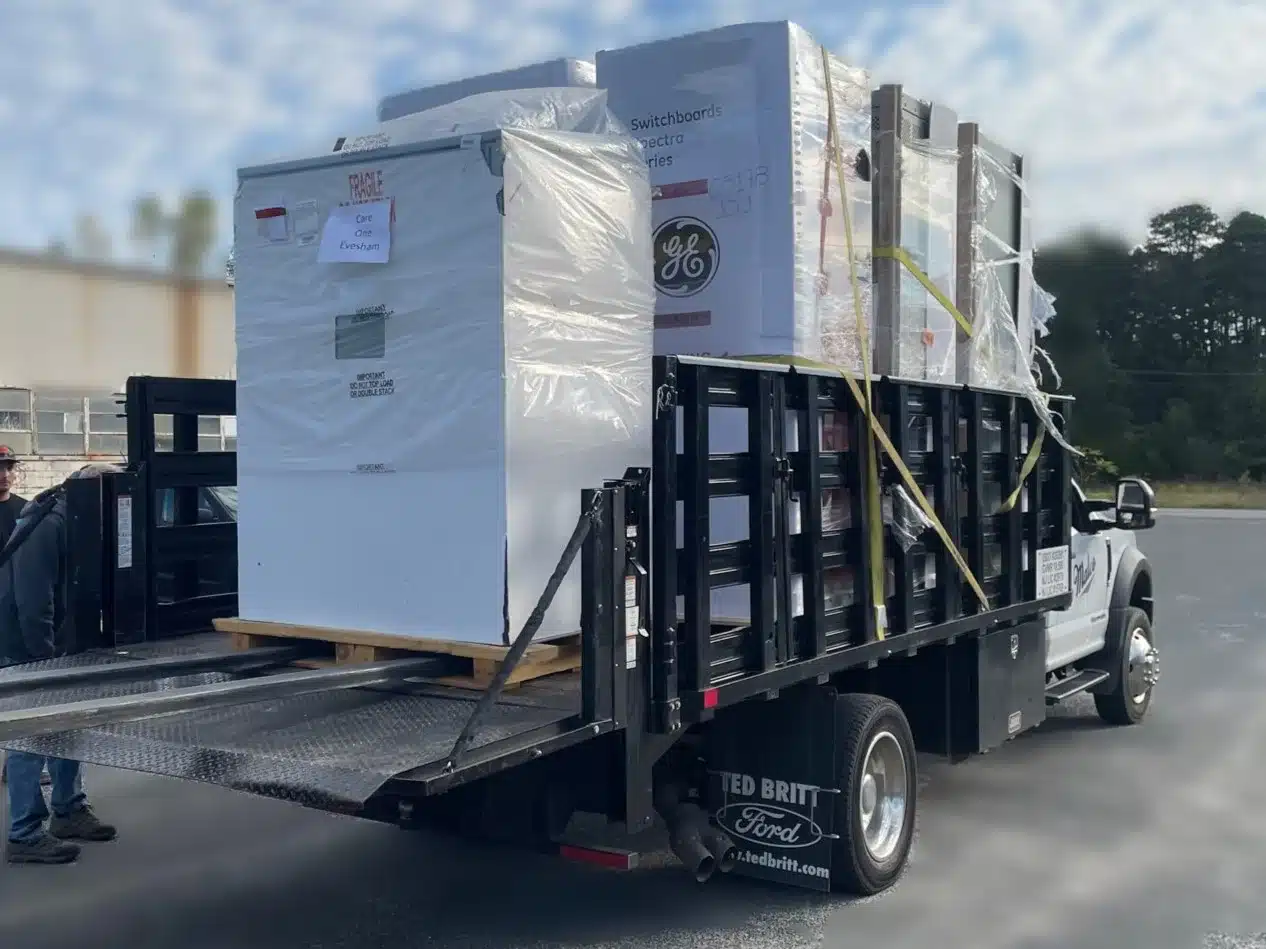
When you’re storing oversized industrial materials — solar panels, hydrogen fuel cells, steel components, large infrastructure parts — space alone isn’t the answer. What matters is how that space is planned.
Poorly designed warehouse storage can lead to damaged materials, safety issues, compliance risks, and unnecessary handling costs. A well-organized industrial storage strategy does the opposite: it protects high-value inventory and keeps projects moving on schedule.
For businesses in and around Vineland, NJ, finding the right industrial storage partner means thinking beyond square footage. It means planning for weight, dimensions, access, environmental control, and safe material flow.
At T2G Logistics, a full-service, asset-based warehousing and 3PL provider headquartered in Vineland, NJ, industrial storage is not an afterthought — it’s a specialty. With three facilities totaling approximately 100,000 square feet and rapid access to New York, Boston, Philadelphia, and Baltimore, T2G supports businesses that need reliable storage for oversized and heavy materials.
Here’s how to plan warehouse storage the right way.
1. Start with accurate dimensional and weight data
Oversized materials require precise planning. Guesswork leads to wasted space or, worse, unsafe stacking.
Before storage planning begins, gather:
- Exact dimensions (length, width, height)
- Weight per unit and per pallet
- Center of gravity, for heavy equipment or uneven loads
- Packaging type (crates, skids, racks, loose materials)
The Occupational Safety and Health Administration emphasizes safe material handling and proper load capacity to reduce workplace injuries and structural failures. Overloading racking systems or stacking improperly increases the risk of collapse and worker injury.
For heavy industrial materials, knowing the load-bearing capacity of floors and racks is essential. Warehouses designed for light consumer goods are not built for solar modules, fuel cells, or structural components.
Industrial storage starts with engineering awareness.
2. Evaluate floor load capacity and structural support
Oversized industrial materials often weigh significantly more than standard palletized goods.
Warehouse floors are rated for specific pounds per square foot. Exceeding that capacity can lead to structural stress and long-term damage.
When planning storage:
- Confirm floor load ratings
- Determine point load vs. distributed load
- Avoid stacking heavy materials in unsupported areas
- Plan spacing to reduce concentrated pressure
Industrial commodities like renewable energy components often arrive in bulk and remain stationary for extended periods. That makes structural planning even more important.
At T2G Logistics in Vineland, NJ, industrial storage layouts are designed with heavy materials in mind rather than retrofitted after the fact.
3. Plan for safe access and material flow
Oversized items are rarely moved by hand. They require forklifts, reach trucks, or specialized handling equipment.
Proper storage planning includes:
- Wide aisle spacing
- Clear turning radii
- Defined staging areas
- Separate inbound and outbound zones
The National Institute for Occupational Safety and Health reports that forklift-related incidents are a leading cause of injuries in warehouses. Many of these incidents occur due to tight spaces and obstructed pathways.
Industrial warehouse storage should reduce congestion, not create it. When oversized materials are stored correctly:
- Equipment operators can move safely
- Loading and unloading times decrease
- Damage risk is minimized
- Project timelines stay on track
In regions like Vineland, NJ, where access to major East Coast markets is critical, efficiency directly affects distribution performance.
4. Consider environmental sensitivity
Not all oversized materials are purely structural.
Renewable energy components such as PV/solar modules and hydrogen fuel cells may require protection from:
- Excessive humidity
- Temperature fluctuations
- Prolonged UV exposure
- Dust and debris
The U.S. Department of Energy highlights that environmental conditions can affect the performance and longevity of solar modules. Improper storage before installation may affect efficiency.
That means warehouse storage for renewable energy materials must include:
- Indoor, protected space
- Clean staging areas
- Stable environmental conditions
- Secure packaging support
Industrial storage is not just about fitting large materials. It’s about protecting their performance value.
5. Design storage layouts based on turnover frequency
Some oversized materials move quickly. Others remain stored for weeks or months while infrastructure projects progress.
Effective warehouse planning separates:
- Fast-moving project materials
- Long-term stored bulk inventory
- Cross-dock or staging inventory
Placing high-turn items near loading docks reduces handling time. Long-term storage items can be positioned deeper within the facility.
Industrial storage specialists understand that movement patterns matter just as much as dimensions. At T2G Logistics, warehouse layouts are designed to support both short-term staging and extended storage for infrastructure and renewable energy projects.
6. Use proper blocking, bracing, and stabilization
Oversized materials often have irregular shapes or non-uniform weight distribution.
Improper stacking can lead to:
- Product tipping
- Structural collapse
- Packaging damage
- Worker injury
Best practices include:
- Blocking heavy items to prevent shifting
- Using dunnage for weight distribution
- Securing unstable loads
- Avoiding unsupported overhangs
The Federal Motor Carrier Safety Administration provides cargo securement guidelines that, while designed for transport, also apply to safe storage practices.
The principle is simple: heavy materials must remain stable at rest and in motion.
7. Build in inspection and compliance processes
Industrial materials are often tied to regulated projects, including energy and infrastructure initiatives.
Storage facilities should include:
- Regular inspection schedules
- Documented handling procedures
- Clear labeling and inventory tracking
- Secure access controls
Oversized materials frequently represent high-value assets. Security, accountability, and traceability are essential. An experienced industrial warehousing partner helps businesses maintain compliance while protecting their inventory.
8. Think about scalability
Infrastructure and renewable energy projects can scale quickly.
Warehouse storage planning should account for:
- Sudden volume increases
- Project phase expansions
- Temporary overflow needs
- Seasonal shifts
A facility that can adapt prevents disruptions. With approximately 100,000 square feet across three facilities in Vineland, NJ, T2G Logistics supports businesses that need space flexibility without sacrificing organization.
Proximity to major East Coast markets adds another layer of value. Rapid access to New York, Boston, Philadelphia, and Baltimore allows industrial clients to store materials centrally while maintaining efficient distribution.
Why location matters for oversized industrial storage
Vineland, NJ offers a strategic advantage for industrial storage operations:
- Access to major highways
- Proximity to key metropolitan markets
- Reach to ports and infrastructure corridors
- Lower congestion compared to dense urban centers
For oversized materials, fewer transfer points mean less handling and a lower risk of damage. Centralized industrial storage in South Jersey can serve projects throughout the Northeast while keeping inventory secure and organized.
Common mistakes with oversized warehouse storage
To avoid costly errors, watch for these common issues:
- Renting space without checking floor load capacity
- Underestimating aisle clearance requirements
- Stacking materials without stabilization planning
- Ignoring environmental sensitivities
- Using facilities designed for light retail goods
- Failing to separate staging from long-term storage
Oversized industrial materials require industrial-focused storage, not generic warehouse space.
The role of an industrial storage specialist
Industrial storage is different from traditional warehousing. It requires:
- Experience with bulky commodities
- Understanding of renewable energy components
- Safe handling systems
- Structured warehouse layouts
- Strategic location planning
T2G Logistics has experience storing renewable energy products such as PV/solar modules and hydrogen fuel cells, as well as infrastructure materials and other bulky commodities. That focus makes a difference when businesses are looking for reliable warehouse storage in and around Vineland, NJ.
Storage planning protects projects
Oversized industrial materials represent major investments. Improper storage can cause delays, damage, compliance concerns, and added costs.
Proper planning includes:
- Accurate weight and dimension analysis
- Floor capacity evaluation
- Safe equipment access
- Environmental protection
- Stabilization procedures
- Scalable space management
When warehouse storage is approached strategically, it becomes a competitive advantage — not just a holding space.
Ready to plan industrial storage the right way?
If your business needs secure, well-organized warehouse storage for oversized industrial materials in and around Vineland, NJ, it’s worth working with a team that specializes in industrial commodities.
Get in touch and we’ll walk through structured warehouse planning for your next project. Planning starts with the right space and the right partner.