Industrial StorageConstructionProject ScheduleWarehouse ManagementVineland NJ
Common Storage Mistakes That Delay Construction Projects
Learn the top storage mistakes that delay construction projects and how proper warehousing keeps jobs on schedule for contractors.
Construction timelines are tight. Materials are expensive. Labor is scheduled weeks or months in advance. Yet many project delays don’t start on the jobsite. They start in storage.
At T2G Logistics, we’ve seen it firsthand. As an asset-based warehousing and 3PL provider headquartered in Vineland, NJ, we support infrastructure, renewable energy, and industrial projects across the Northeast. With three facilities totaling approximately 100,000 square feet, we regularly handle PV/solar modules, hydrogen fuel cells, and other bulky commodities that require proper care before installation.
If you’re managing a project in or around Vineland, NJ — or anywhere with regional access to New York, Philadelphia, Boston, or Baltimore — here are the most common storage mistakes that can quietly derail your schedule.
1. Underestimating environmental sensitivity
Not all construction materials can sit in a yard under a tarp.
Solar panels, hydrogen fuel cells, electrical components, adhesives, insulation materials, and certain metals all respond to environmental conditions. According to guidance from the U.S. Department of Energy and multiple solar manufacturers, prolonged exposure to moisture and improper stacking can lead to microcracks in PV modules, corrosion, and electrical performance issues.
Moisture intrusion is especially common in humid climates. The U.S. Environmental Protection Agency also notes that high humidity contributes to corrosion and mold growth, which can affect packaging and materials.
When storage conditions are not controlled:
- Electrical components may degrade
- Packaging weakens
- Materials require reinspection or replacement
- Installation is delayed
Industrial storage requires adequate indoor space, secure racking, and material-handling protocols. Simply finding space is not the same as proper warehousing.
2. Poor inventory visibility
One of the most overlooked delays in construction isn’t damage — it’s confusion.
If you cannot answer these questions quickly, you have a storage problem:
- How many units are on site?
- Which pallets arrived last week?
- What has already been staged for delivery?
- Is everything labeled correctly?
Without organized receiving and tracking processes, materials go missing or get staged incorrectly. Crews show up ready to install, only to discover that critical components are still buried in the warehouse or incorrectly counted.
A well-run warehouse operation should provide:
- Clear receiving documentation
- Organized pallet placement
- Inventory tracking
- Easy access for staged shipments
When materials are organized from day one, projects move forward without guesswork.
3. Improper material handling
Heavy, oversized construction materials are unforgiving.
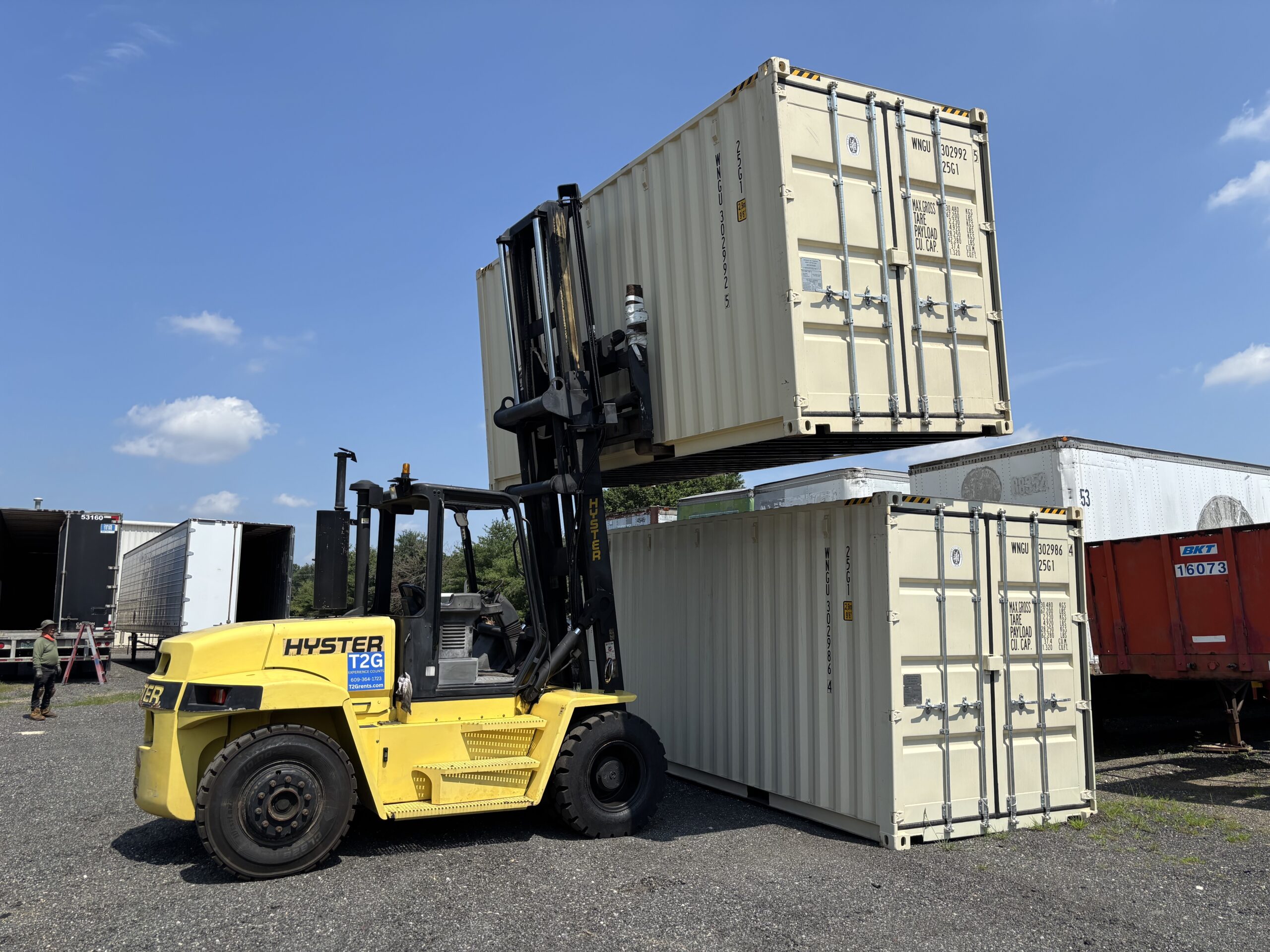
Improper forklift operation, incorrect stacking heights, or insufficient aisle space can result in:
- Damaged packaging
- Cracked panels
- Bent framing
- Lost warranty claims
Many solar manufacturers specify strict stacking and lifting procedures, and ignoring those guidelines can void warranties. The National Renewable Energy Laboratory has documented that physical handling damage can contribute to performance degradation in photovoltaic modules.
Industrial storage specialists understand:
- Weight distribution
- Safe stacking heights
- Correct lifting equipment
- Clear staging lanes
These operational details may seem minor, but when overlooked, they create delays that ripple through the entire construction schedule.
4. Overcrowded or shared yard space
Construction materials often require short-term storage before deployment. Many businesses rely on open yard space without considering access logistics.
When materials are stored in overcrowded areas:
- Access routes get blocked
- Crews spend time repositioning pallets
- Equipment traffic increases the risk of damage
- Retrieval times slow down
Warehouse layout matters. Organized indoor space with designated zones for specific projects improves speed and reduces confusion. Clear access pathways reduce time lost during loading and staging.
At T2G Logistics in Vineland, NJ, layout planning is not an afterthought. Efficient flow is built into daily operations because storage should support your timeline, not slow it down.
5. Lack of receiving inspection
When shipments arrive from overseas or cross-country suppliers, issues may already exist. If receiving inspections are skipped, damage may not be discovered until installation day.
That delay becomes costly.
Common inbound issues include:
- Damaged crates
- Broken straps
- Moisture exposure
- Missing components
A structured receiving process identifies problems early, while corrective action is still possible. This step alone can prevent weeks of project disruption.
6. Inadequate security measures
Construction materials — particularly renewable energy components and copper-based products — can be targets for theft.
The National Insurance Crime Bureau has reported ongoing increases in construction site theft across the U.S. Even a single missing pallet can disrupt scheduling, inspections, and contractor timelines.
Secure industrial warehousing should include:
- Controlled access
- Monitored facilities
- Clear chain-of-custody documentation
Security is not just about loss prevention — it protects project continuity.
7. Failing to plan for phased deployment
Large infrastructure or renewable energy projects rarely install everything at once. Materials must be staged according to construction phases.
Without coordinated staging:
- Too much inventory arrives at once
- Jobsite congestion increases
- Crews cannot locate phase-specific materials
- Weather exposure risk rises
Phased deployment planning aligns storage with installation schedules. Materials remain protected until needed and are staged in logical sequence.
Industrial storage should function as a buffer that supports your build schedule, not something that overwhelms it.
8. Choosing storage based only on price
It’s tempting to choose the lowest-cost storage option. But price alone rarely reflects operational quality.
Ask instead:
- Does the facility specialize in industrial and bulky commodities?
- Is the team experienced with infrastructure and renewable energy products?
- Can they provide organized staging and documentation?
- Is the location strategically positioned for regional access?
Located in Vineland, NJ, T2G Logistics offers rapid access to major Northeast markets including New York, Philadelphia, Boston, and Baltimore. Location matters when projects require flexible scheduling and quick distribution.
The right warehouse partner reduces risk. The wrong one introduces uncertainty.
Why industrial storage expertise matters
Industrial materials are not retail inventory. They require:
- Structured receiving
- Secure indoor storage
- Proper handling equipment
- Organized staging
- Inventory visibility
T2G Logistics was built around these needs. With approximately 100,000 square feet of warehouse space across three facilities, we support businesses storing renewable energy components, infrastructure materials, and other large commodities.
We don’t treat storage as passive space. We treat it as part of your project workflow.
A smarter approach to construction storage
Construction delays rarely happen for one dramatic reason. More often, they result from small oversights:
- A pallet stacked incorrectly
- A shipment not inspected
- Materials buried behind other freight
- Missing documentation
- Environmental exposure
Each mistake compounds. Each delay costs time.
Well-managed industrial warehousing helps prevent those issues before they reach the jobsite.
Ready to protect your timeline?
If you’re managing a construction or renewable energy project in or around Vineland, NJ, storage should be working for you, not creating risk.
At T2G Logistics, we specialize in industrial warehousing to support project continuity. With secure facilities, organized receiving, and strategic access to the Northeast, we help businesses reduce storage-related delays.
Get in touch and we’ll talk through how we can support your next project. When storage is handled correctly, your project moves forward with confidence.